

Decluttering Tips
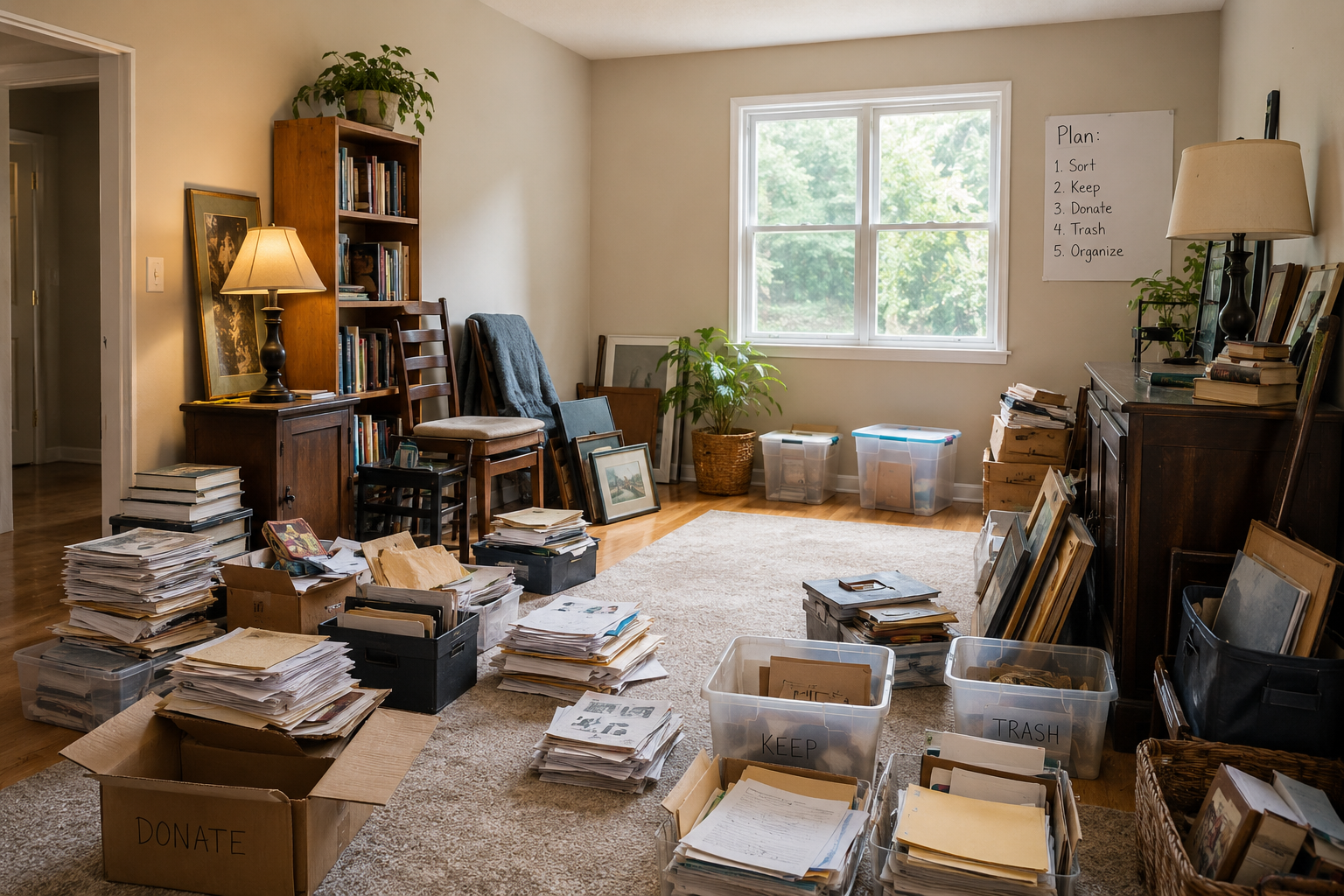
What should I get rid of?
Decluttering often begins with a simple goal but quickly raises many questions. What should stay? What should go? Where should items be stored? How can clutter be prevented from returning? Answering these questions is an important part of creating a more organized and functional living space.
The process can sometimes feel overwhelming, but it helps to focus on solutions rather than the size of the task. Planning is an important first step. By dividing a space into manageable sections and working on one area at a time, the process becomes easier to approach and less stressful to complete.
Deciding what to keep and what to let go is often one of the greatest challenges. As you work through the process, keep your goals in mind and focus on creating a space that better supports your daily life. The effort invested today can lead to a home that is easier to organize, maintain, and enjoy.
Deciding what to keep
Deciding what to donate
Managing sentimental items
Preventing clutter from returning
Creating simple routines
Deciding what to donate
Donating items can be one of the most rewarding parts of the decluttering process. Many belongings that no longer serve a purpose in your home may still be useful to someone else. Clothing, household goods, furniture, books, toys, and other items in good condition can often be donated rather than discarded.
When considering whether to donate an item, ask yourself:
Have I used this within the last year?
Does it still fit my current lifestyle and needs?
Is it in good condition and usable by someone else?
Am I keeping it out of habit rather than purpose?
Donating can help reduce clutter while allowing useful items to continue serving a purpose. It can also make organizing easier by reducing the number of belongings competing for valuable storage space.
Before donating, take a few moments to sort items into categories and ensure they are clean and in usable condition. Many local charities, shelters, community organizations, and donation centers welcome gently used items.
The goal is not simply to remove possessions, but to make thoughtful decisions that create more space in your home while helping others benefit from items you no longer need.
Deciding what to keep
One of the most challenging parts of decluttering is deciding what should remain and what should be removed. Many items accumulate over time through purchases, gifts, hobbies, family needs, or simple habit. As a result, it is easy for belongings to occupy valuable space without serving a current purpose.
When evaluating an item, ask yourself:
Do I use this regularly?
Does it serve a useful purpose today?
Would I purchase it again if I did not already own it?
Is it worth the space it occupies?
Not every item needs to be removed, but every item should have a reason for remaining. The goal is not to create an empty home, but to make room for the things that support your daily life and bring value to your household.
By making thoughtful decisions about what to keep, it becomes easier to organize, maintain, and enjoy the spaces within your home.
Managing sentimental items
Sentimental items are often the most difficult belongings to evaluate during the decluttering process. Photographs, family heirlooms, gifts, childhood keepsakes, and other meaningful possessions can hold memories that make letting go challenging. While these items may not serve a daily purpose, they often represent important moments, relationships, and experiences.
When reviewing sentimental items, consider asking yourself:
Does this item hold a meaningful memory?
Would a photograph preserve the memory just as well?
Do I have room to store it properly?
Am I keeping it because it is meaningful or simply because I feel obligated to keep it?
Not every sentimental item needs to be discarded, nor should every item automatically be kept. The goal is to identify the possessions that truly matter while finding practical ways to store and protect them.
Consider creating a dedicated memory box, storage container, or display area for the items that are most meaningful. Limiting sentimental items to a designated space can help preserve important memories without allowing them to overwhelm your living areas.
Decluttering sentimental belongings is often a gradual process. There is no need to rush decisions. Taking time to thoughtfully evaluate these items can help ensure that the memories you value most remain a meaningful part of your home and life.
Preventing clutter from returning
Successfully decluttering a space is an important accomplishment, but maintaining that progress requires ongoing attention. Without simple habits and routines, clutter can gradually return and once again make spaces feel crowded and difficult to manage.
One of the most effective ways to prevent clutter is to give items a designated home. When belongings have a specific place to be stored, it becomes easier to return them after use and maintain organization over time.
Consider asking yourself:
Does this item have a designated storage location?
Am I bringing more items into the home than I am removing?
Have I used this item recently?
Is this purchase necessary, or will it add to future clutter?
Creating simple daily habits can also help maintain organized spaces. Returning items to their proper locations, sorting mail regularly, putting away purchases promptly, and addressing small messes before they grow larger can make a significant difference.
Periodically reviewing closets, cabinets, storage areas, and other frequently used spaces can help identify items that are no longer needed. Regular maintenance often requires far less effort than completing another major decluttering project.
The goal is not to create a perfectly organized home at all times, but to develop practical habits that make organization easier to maintain. Small, consistent efforts can help keep clutter under control while supporting a more comfortable and functional living environment.
Creating simple routines
Maintaining an organized home does not require complicated systems or large amounts of time. In many cases, simple daily routines can help prevent clutter from accumulating and make household organization easier to maintain.
Small actions performed consistently often have a greater impact than occasional large organizing projects. Returning items to their designated locations after use, sorting mail regularly, placing purchases where they belong, and spending a few minutes each day addressing small messes can help keep spaces organized and functional.
Consider building routines around everyday activities by asking yourself:
Can this item be put away immediately after use?
Is there a designated place for this item?
Can this task be completed in a few minutes rather than postponed?
Will addressing this now prevent a larger task later?
Simple routines can also be adapted to different areas of the home. Kitchens, living spaces, garages, pet areas, and storage spaces all benefit from consistent habits that support organization and cleanliness.
The goal is not perfection, but creating manageable routines that fit naturally into daily life. Small, consistent efforts can help maintain organized spaces while reducing stress and preventing clutter.
You may also find this helpful:
Before spending money, take a careful look at what you already own.