

Pet Essentials
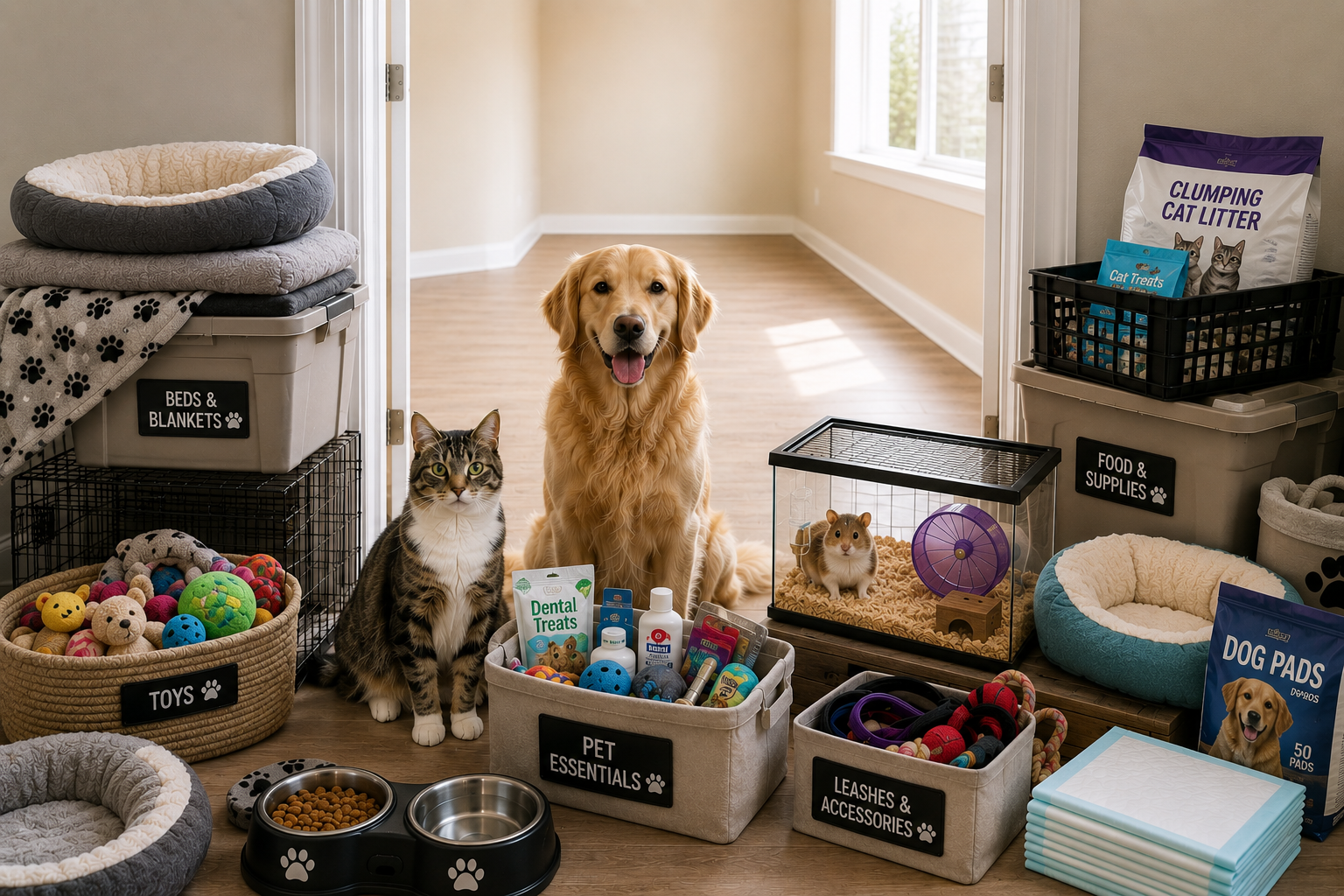
Organize Pet Supplies
Food
Treats
Toys
Grooming items
Leashes and accessories
Organize Pet Supplies
Pet supplies can quickly become scattered throughout a home if they do not have a designated storage area. Food, treats, toys, grooming items, leashes, and other accessories are often used daily, making organization important for both convenience and cleanliness. Creating a dedicated space for pet essentials helps reduce clutter and makes it easier to care for your pets.
Food
Pet food should be stored in a cool, dry location and kept in sealed containers whenever possible. Proper storage helps maintain freshness while protecting food from moisture and pests. Keeping food near feeding areas can also simplify daily routines and reduce unnecessary trips throughout the home.
Treats
Treats are often used for training, rewards, and special occasions. Storing treats in a designated container keeps them fresh and prevents them from becoming mixed with other pet supplies. Consider placing frequently used treats in an easily accessible location while storing extra supplies nearby.
Toys
Pets can quickly accumulate a variety of toys over time. Balls, chew toys, ropes, and interactive toys can easily create clutter if left throughout the home. A storage basket or container provides a simple solution while allowing pets and family members to quickly gather toys after playtime. Rotating toys occasionally can also help maintain your pet's interest and reduce clutter.
Grooming Items
Brushes, combs, shampoos, nail trimmers, and other grooming supplies should be stored together in one location. Keeping grooming items organized allows routine care to be completed more efficiently while ensuring important supplies are easy to find when needed. A small storage bin or cabinet can help keep these items neatly contained.
Leashes and Accessories
Leashes, harnesses, collars, waste bags, and travel accessories are often needed when leaving the home. Installing hooks near an entryway or storing these items in a dedicated container can help prevent last-minute searching before walks or outings. Keeping accessories together also makes it easier to maintain a regular routine for both pets and owners.
By creating designated storage areas for pet essentials, daily care becomes simpler and more organized. The goal is not perfection, but creating a practical system that supports both your pets and your household.
Creating a Comfortable Space for Your Pets
Pets are an important part of the family. Whether they have been with us since childhood, were adopted, rescued, or received as a gift, they quickly become a valued part of our daily lives.
Because pets depend on us for their care, it is important to create a space that supports their comfort, health, and daily needs. Food, bedding, toys, grooming supplies, and other essentials can easily become scattered throughout the home without a plan for organization.
Creating a dedicated area for pet supplies makes daily routines easier and helps keep everything within reach when it is needed. A well-organized pet space can provide comfort for your pets while reducing clutter and making care more convenient for the entire household.
The goal is not to create a perfect space, but a practical one that supports the needs of both pets and their families.
Create a Feeding Station
Choose a dedicated location
Keep food and water accessible
Store food nearby
Make cleanup easier
Providing a dedicated location for food and water can make daily pet care easier while helping keep the home organized. Whether you have a dog, cat, hamster, or other small pet, establishing a feeding area gives pets a familiar place to eat and drink while reducing clutter throughout the home.
Choose a Dedicated Location
Select an area that is convenient for both pets and family members. The location should be easy for pets to access while allowing enough space for food and water bowls. A quiet area away from heavy foot traffic can help pets feel comfortable during feeding times.
Keep Food and Water Accessible
Pets should have easy access to fresh water throughout the day. Food and water bowls should be placed where they can be reached without obstacles. Consider the size and needs of your pet when determining the best location for feeding supplies.
Store Food Nearby
Keeping pet food, treats, and feeding accessories close to the feeding station can simplify daily routines. Sealed containers help maintain freshness while reducing the need to search for supplies throughout the home. Nearby storage also makes feeding time more efficient.
Make Cleanup Easier
Feeding areas can quickly become messy. Placing bowls on a washable mat can help contain spills and make cleanup easier. Keeping cleaning supplies nearby allows accidents and messes to be handled quickly, helping maintain a clean and comfortable environment for both pets and family members.
A well-planned feeding station can save time, reduce clutter, and create a consistent routine that benefits both pets and their owners.
Manage Pet Toys and Accessories
Rotate toys
Store extras in bins
Keep walk accessories together
Pet toys and accessories help keep pets active, engaged, and comfortable. Over time, however, toys, leashes, harnesses, and other accessories can begin to accumulate throughout the home. Creating a simple system for managing these items can help reduce clutter while making daily routines easier for both pets and their owners.
Rotate Toys
Many pets have a collection of favorite toys, but keeping every toy available at the same time can create unnecessary clutter. Consider rotating toys by storing some while leaving a selection available for daily use. Introducing different toys periodically can help maintain your pet's interest while keeping play areas organized.
Store Extras in Bins
Extra toys, seasonal items, replacement accessories, and backup supplies can quickly take over shelves and storage areas. Using labeled bins or containers provides a convenient way to keep these items organized and easy to find when needed. Clear containers can make it easier to identify contents without searching through multiple boxes.
Keep Walk Accessories Together
Leashes, harnesses, collars, waste bags, and travel accessories are often needed at a moment's notice. Keeping these items together in a dedicated location near an entryway or pet area can help simplify daily walks and outings. Hooks, baskets, or small storage containers can help keep everything organized and ready to use.
A simple storage system for toys and accessories can help reduce clutter, improve organization, and make everyday pet care more convenient. The goal is to create an organized space where pets can enjoy their belongings while owners can easily find what they need.
Create Comfortable Resting Areas
Pet beds
Blankets
Crates
Quiet spaces
Choosing locations that are comfortable and easy to maintain
Just like people, pets benefit from having a comfortable place to rest and relax. Creating a dedicated resting area can help pets feel secure while providing them with a quiet space away from daily household activity. Whether you have a dog, cat, hamster, or another small pet, a thoughtfully arranged resting area can contribute to their overall comfort and well-being.
Pet Beds
A comfortable pet bed provides a designated place for rest while helping define a pet's personal space within the home. Choose a bed that is appropriate for your pet's size and needs. Beds should be easy to clean and placed in an area where pets feel comfortable and secure.
Blankets
Blankets can add warmth and comfort to resting areas while helping protect furniture and pet beds. Many pets enjoy having familiar blankets nearby because they provide a sense of comfort and security. Keeping extra blankets stored in a nearby container can make cleaning and rotation easier.
Crates
When introduced properly, crates can serve as safe and comfortable resting areas for many pets. A crate should provide enough room for a pet to stand, turn around, and rest comfortably. Soft bedding and familiar items can help make the space more inviting while creating a secure retreat when pets need quiet time.
Quiet Spaces Away from Heavy Traffic
Pets often appreciate areas where they can rest without frequent interruptions. Consider placing resting areas away from busy hallways, entryways, and other high-traffic locations. A quieter location can help reduce stress and provide a more relaxing environment for naps and overnight rest.
Choose Locations That Are Comfortable and Easy to Maintain
When selecting a resting area, consider both your pet's comfort and the ease of maintaining the space. Locations that allow for regular cleaning and easy access to bedding, blankets, and supplies can help keep the area fresh and inviting. The goal is to create a space that works well for both pets and their owners.
A comfortable resting area provides pets with a place to relax, recharge, and feel secure. With a little planning, it is possible to create a space that supports your pet's comfort while fitting naturally into your home and daily routine.
Keep Pet Areas Clean, Safe and Easy to Maintain
Food and water spills
Pet hair management
Cleaning bedding and blankets
Litter and cage maintenance
Storing cleaning supplies nearby
Creating simple cleaning routines
Creating an organized pet area is only part of the process. Maintaining that space helps ensure it remains comfortable for pets and convenient for family members. A few simple habits can help prevent clutter, reduce odors, and make daily pet care easier
Food and Water Spills
Food and water bowls can quickly create small messes around feeding areas. Placing bowls on a washable mat can help contain spills and make cleanup easier. Regularly wiping the feeding area can help keep floors clean while preventing food and water from spreading to other parts of the home.
Pet Hair Management
Pet hair is a common part of pet ownership, especially for dogs and cats. Regular brushing can help reduce the amount of loose hair throughout the home while supporting your pet's grooming needs. Keeping a small vacuum, lint roller, or cleaning brush nearby can make quick cleanups more convenient.
Cleaning Bedding and Blankets
Pet beds, blankets, and other soft materials should be cleaned regularly to maintain a fresh and comfortable resting area. Washing bedding according to manufacturer recommendations can help remove dirt, pet hair, and odors while extending the life of the materials.
Litter and Cage Maintenance
Cats, hamsters, and other small pets require regular cleaning of litter boxes, cages, and habitats. Establishing a consistent cleaning schedule can help control odors while providing pets with a healthier living environment. Keeping necessary cleaning supplies nearby can make routine maintenance easier to complete.
Store Cleaning Supplies Nearby
Storing pet-safe cleaning supplies close to pet areas can help make unexpected messes easier to manage. Cleaning cloths, paper towels, pet-safe cleaners, waste bags, and grooming tools should be kept organized and easily accessible when needed.
Create Simple Cleaning Routines
A few minutes of daily maintenance can help prevent larger cleaning tasks later. Returning toys to storage bins, wiping feeding areas, brushing pets, and checking bedding regularly can help keep pet spaces organized and comfortable. Consistent routines often require less effort than waiting for clutter and messes to build up.
A clean and organized pet area supports the health, comfort, and well-being of both pets and their owners. The goal is not perfection, but creating simple habits that make caring for pets easier while maintaining a comfortable home environment.